
Your outdoor space may seem pretty cold and lifeless at this time of year, but any garden, no matter how small, can be a vital resource and safe haven for wildlife all year round. And if you can work in community with your neighbours, your impact on nature has the potential to be even more valuable.
A single wildlife-friendly garden in an urban setting, or even a balcony or window box growing plants for pollinators later in the year, can become an oasis for insects, birds and mammals. Just think of the impact you could have if those efforts were magnified by those living near you. A shared wildlife garden in an apartment block, a row of balconies with bee-friendly flowers, an urban development with hedgehog tunnels in fences between gardens or a native hedgerow running the length of a street can all become busy highways for nature to flourish.
Physical connections
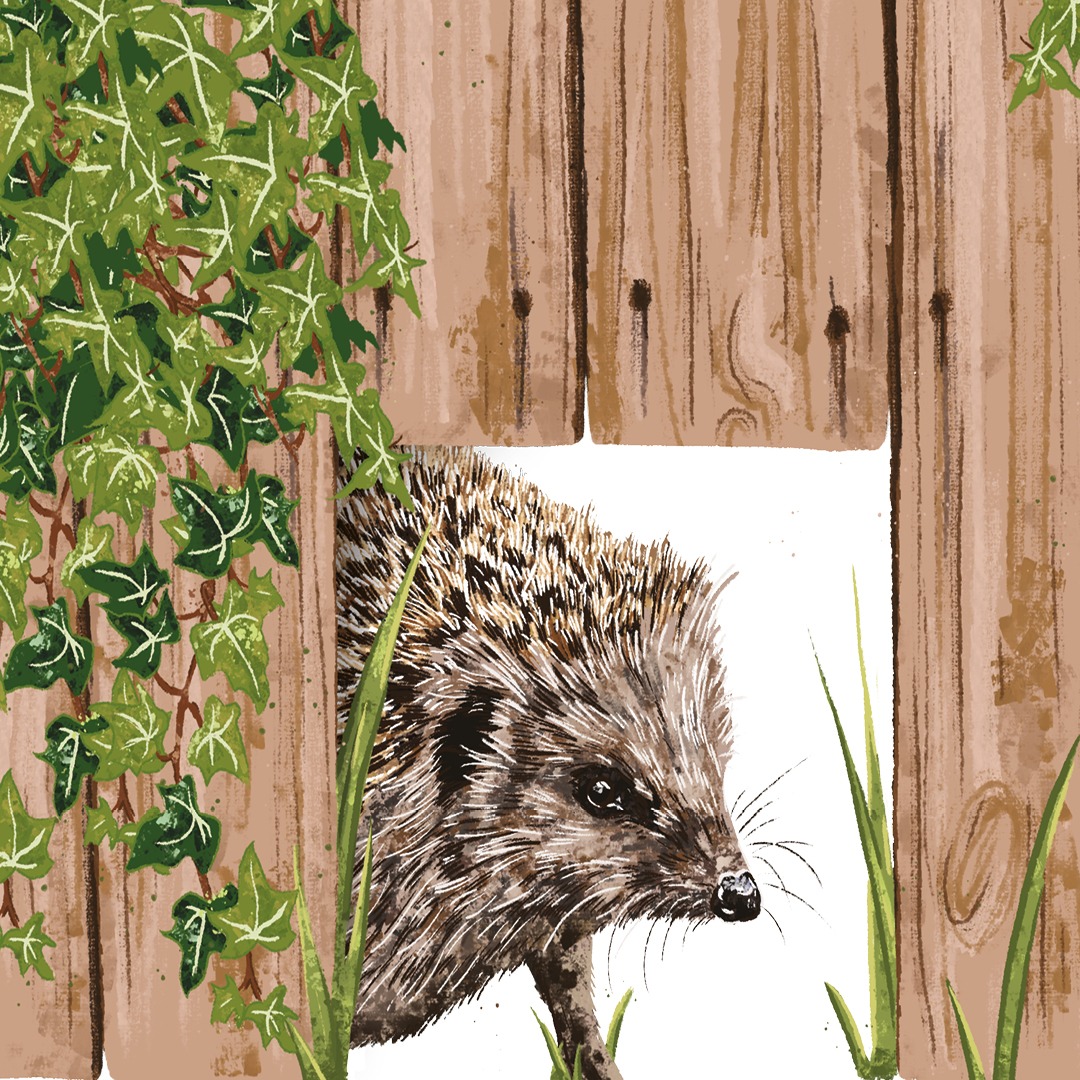
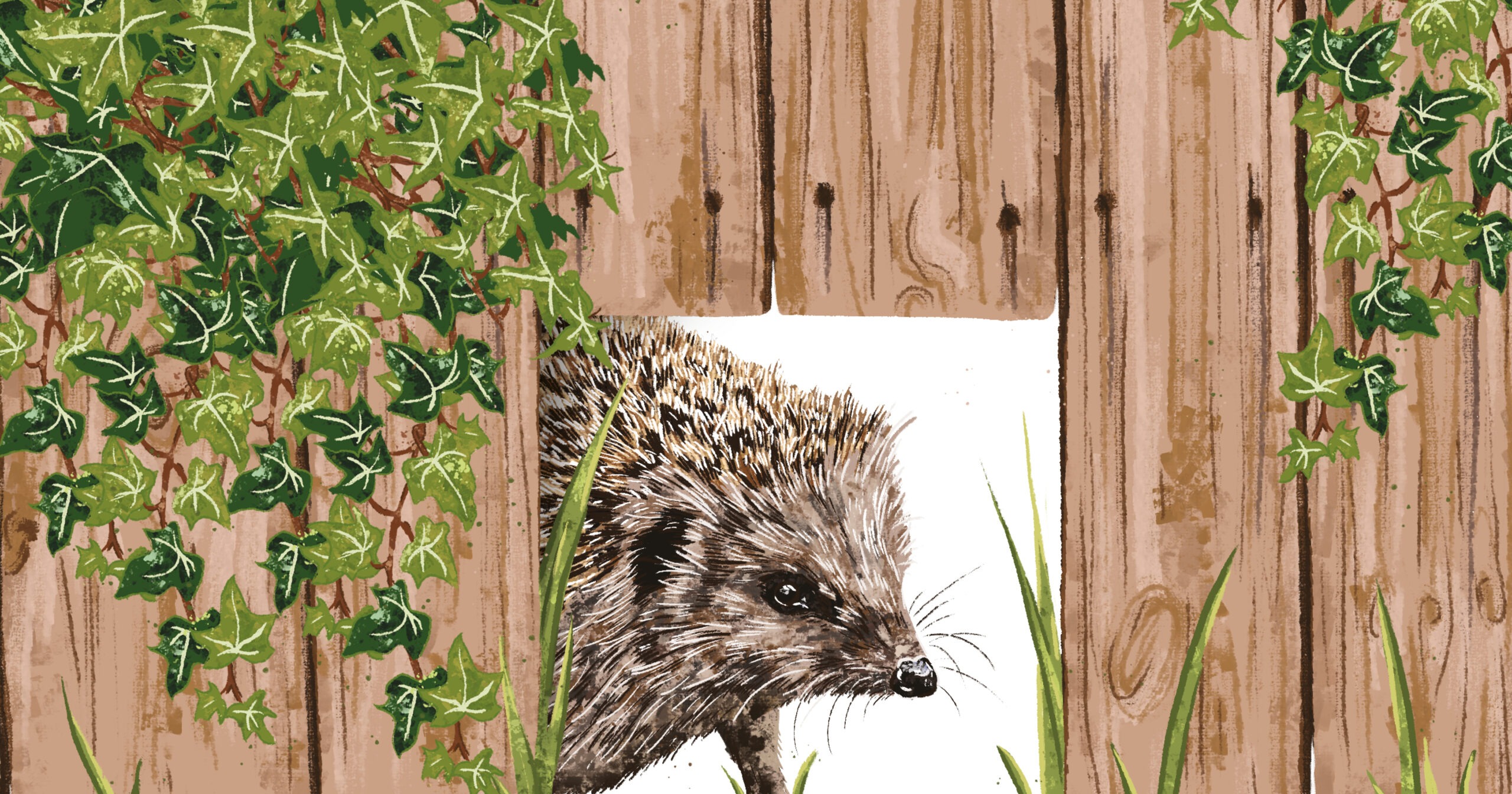
When gardens, plots or balconies are divided to mark property boundaries, these physical divisions like fences and walls can also form boundaries to wildlife. In the UK, secure wooden fencing is one of the reasons native hedgehog numbers are in decline, and they are now on the Red List for British mammals vulnerable to extinction.
Maureen Carvill is wildlife gardening officer for Ulster Wildlife and she explains that hedgehogs can travel up to 2km a night in search of food, shelter and mates. ‘They need a 13cm-wide space at the bottom of a fence or wall to move from garden to garden,’ she says. ‘It can be as simple as cutting a CD case-sized square in the bottom of a fence and getting all of your neighbours to do the same thing, to create hedgehog highways.’
You can also make fencing and walls less barren by planting wildlife-friendly climbers like honeysuckle, wisteria, jasmine and ivy. The RSPB suggests that ‘cloaking’ with climbing plants can be ‘a beautiful way of bringing life to vertical surfaces’ and providing food and shelter for birds, bees, butterflies, moths and other insects. These plants often grow through both sides of a fence, so agreement between neighbours is useful.
Green boundaries
If you’re lucky enough to have a native hedgerow – or the ability to plant one – these are the most impactful boundary dividers for the environment. The Woodland Trust calls them ‘vital refuges for wildlife’, pointing out they also ‘clean our air, capture carbon, reduce flooding and give clues to historic land management’. Agree with your neighbours not to prune hedgerows during nesting season or in the autumn when berries are providing food for birds. Ornamental hedging can also be made more wildlife-friendly by planting native shrubs and climbers like ivy within it. A good hedge can support wildlife from insects and bees to bats, birds, rodents, keystone species like barn owls and even reptiles.
Trees can be a contentious issue for neighbours, especially if they span boundaries, overhang gardens or block light. Good communication and cooperation is essential when making any tree-management decisions. In Costa Rica, the Sloth Conservation Foundation runs a Connected Gardens Project to encourage people to think about the ‘continuous canopy cover’ needed for sloths and other wildlife to move between properties. The charity is working to reconnect gaps caused by human infrastructure and roads with reforestation and wildlife rope-bridge installations.
Community projects
Lots of wildlife-friendly gardening ideas can be done in community with others – a great way to meet or strengthen connections with your neighbours. The colder months are a good time to tackle new infrastructure projects to get your garden ready for spring. You might create a wildlife pond in a community space, prepare the ground for a wildflower meadow on a rooftop garden, or set up a local compost scheme to share green and brown waste. Maureen suggests creating a ‘dead hedge’ as a wildlife-friendly alternative to fencing, using materials such as wood, sticks, brambles and cuttings weaved between fence posts. ‘You can pretty much use anything that’s too big to go in the compost bin,’ she says. ‘It gradually rots down, but also encourages new growth, and you can plant climbers like ivy and honeysuckle through it too.’
Neighbours could consider clubbing together to buy things such as bird and bat boxes in bulk and help each other with the installation. Species such as house martins, swallows and bats all thrive as larger flocks or colonies. Those with balconies or small patios could think about ‘gardening vertically’ to maximise space – again using boundary walls, stacked pots or trellises. And when organising communal events in your area, be aware of their impact on wildlife. Maureen cautions: ‘If you’re having a bonfire, only build it on the day and make sure you check it for nesting rodents or hedgehogs before lighting.’
Leading the way
In some neighbourhoods there can be a culture of tidiness. Think neatly mowed lawns, pruned hedges, weed-free paving and design features such as decking and artificial grass, all of which can be wildlife deserts. This year, be brave enough to buck the trend, and spread the word as you go.
Katy Bell is senior conservation officer at Ulster Wildlife. She explains: ‘It’s about changing people’s views on what gardens can be, seeing the positives in untidiness and realising that you can create a mini nature reserve.’ When you choose to leave a patch of your lawn unmowed, plant pollinator-friendly bedding at the front of your house or cultivate dandelions and nettles in your borders, be vocal and tell your neighbours why you’re doing it. Offer seeds or cuttings, share homemade compost and suggest planting native shrubs or making hedgehog-friendly fencing at boundaries.
‘Instead of praising your neighbour’s pristine garden, affirm each other’s nature-friendly decisions,’ says Katy.
You could even introduce an element of friendly competition for 2026. Maureen points out that sunflowers are brilliant for pollinators and easy to grow, as well as brightening communal spaces. ‘Share a packet of seeds with your neighbours now and see who can grow the tallest sunflower by summer,’ she says.
Be the change you want to see in your neighbourhood and make it easier for others to follow your lead.
Let nature in – together
Create hedgehog highways
These mammals are native to the UK, parts of Europe, Asia and Africa, but numbers are in decline. Agreeing with neighbours to cut a CD case-sized square at the bottom of a fence will enable hedgehogs to roam freely from garden to garden.
Share waste
When buying compost, always choose peat-free – peat is such an important factor in combating climate change, and it’s vital to conserve it. Alternatively, you can make your own nutrient-rich compost from brown and green waste, or start a community compost scheme with your neighbours. There are plenty of resources online.
Seeds and cuttings
Choose native flowers and herbs to support bees, butterflies and other insects. You can spread the word by sharing seeds or cuttings with your neighbours. Think about night-flowering plants to support moths and bats too.
Boxing clever
When fitting bird or bat boxes, consider asking your neighbours whether they would like to get involved too. Multiple households with boxes increases the options for wildlife, and helps provide shelter for larger colonies of bats or species like swallows.
Be untidy!
Forget keeping up appearances – start a trend in your neighbourhood by ditching pesticides and allowing weeds to grow in your paving, having a no-mow patch of lawn or an untidy hedge. Tell people you’re doing it to help nature.
Give wildlife-friendly gifts
The next time you’re invited to a local barbecue or housewarming, take a wildlife-friendly garden gift. Bee or insect seed ‘bombs’, bird feeders, pollinator-friendly hanging baskets, pots of herbs and bug hotels are all good choices and easy to use.
Get inspired
As part of its Let Nature In campaign, Ulster Wildlife has suggestions for wildlife-friendly gardening. You can download a free digital starter pack from anywhere in the world at ulsterwildlife.org/let-nature-in
Find out more at ulsterwildlife.org and slothconservation.com