
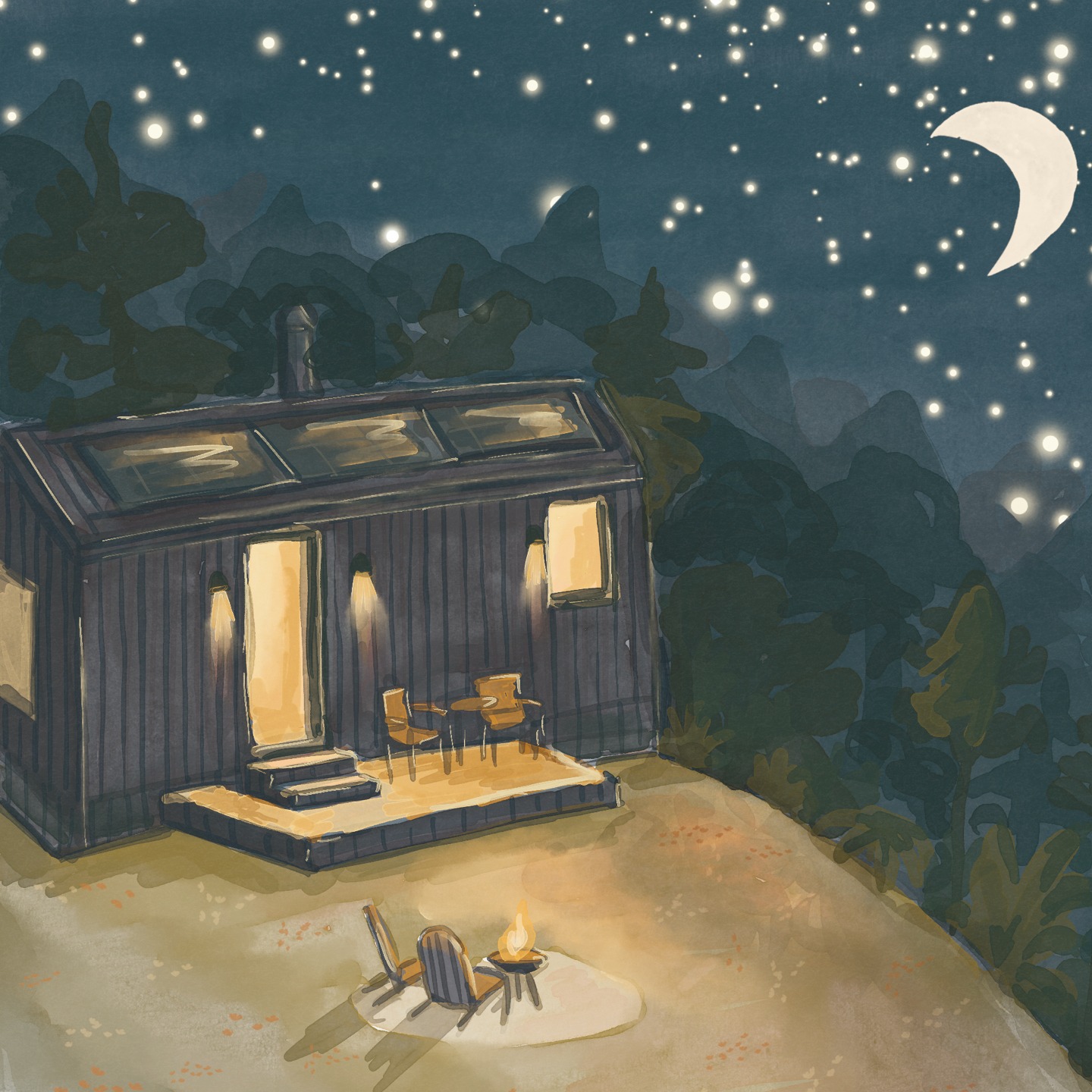
I’m sat outside my cabin nursing a tin mug of camomile tea, dusk throwing shadows across the deck. A muted hoot breaks the silence, echoing from deep in the woods. It’s a strange sound for this city girl. Is that a barn owl, I wonder? Without my phone, I have no way of knowing. The owl hoots again as if to answer, and I’m thrilled. Maybe I’m not so alone after all.
From screen to green
In a world of constant digital distractions, I’ve taken myself offline for a few days and disappeared into nature. I’m staying in Basil, a solitary, self-contained cabin on the wild fringes of Thakeham, a small village in West Sussex – and it’s exactly what I need right now.
Basil is beautiful. A small solar-powered house clad in stripped pine, it has everything I could possibly want – a wood-burning stove, a tiny kitchen with a fridge, a bathroom with a loo and hot shower, a shelf of books and even a Polaroid camera to capture life in analogue for a change. It feels carefully pared back, but still cosy and snug. I could quite happily live here forever.
I booked it through Unplugged, a company which offers digital detox breaks in remote cabins scattered around the country. The number of similar resorts and retreats offering digital-free breaks is growing rapidly. Like me, more and more people are searching for ways to reset and recharge. Wanting a simpler and more intentional break.
In Pinterest’s Summer Trend Report 2025, searches for digital detox ideas are up by 72 per cent. And it’s not hard to see why. According to the Mental Health UK Burnout Report, 91 per cent of UK adults reported having high or extreme levels of stress in 2025.
Each cabin comes with a lockable box for your phone, along with a map, compass and basic Nokia for emergencies. While it’s not entirely necessary to lock away your phone, doing so will only benefit your experience. Using my own self-discipline to drive the digital detox was initially a concern, but I needn’t have worried. I’m so tired of the constant demands of modern life, the second I the lock on the box I’m flooded with relief. The world can do without me for a few days.
Research suggests that three nights away from screens is the sweet spot for a digital detox, long enough to improve sleep, sharpen focus and restore mental clarity. But for me it’s more than that. It’s giving permission to stop being, sometimes performatively, busy for a while and simply rest and recharge.
Small moments
Instead of checking my phone the moment I wake up, I enjoy the small rituals of my day. Hand-grinding coffee beans for my morning brew, mindfully preparing my meals, taking my much longed-for afternoon nap and walking with Miss Babs, my beloved rescue dog. While the cabins comfortably sleep two – it’s a popular romantic weekend break – for me, I’ve chosen to come alone (well, except for Miss Babs). It’s the solitude that really appeals. With a busy job and family commitments, it’s rare that nothing is required of me, so what I notice most is the complete lack of obligation. And it’s bliss.
Mindful shift
On the first day, it takes a while to get used to sitting with my thoughts. I make tea, flick through a book I’ve been meaning to read and fiddle with my tarot cards, trying to ease myself into stillness. Looking up at the trees, spring sunlight dappling through the branches, I hear birdsong and instinctively reach for my phone to pull up Merlin, the birdsong app, before remembering it’s locked away. So I simply listen.
With my mind still buzzing, Miss Babs and I set off on a long, slow amble through the woods. Without music or a podcast in my ears, I’m left with the sound of the breeze in the trees and the occasional burst of birdsong. At first, I march along as I usually do, but gradually I begin to slow down. Time starts to loosen its grip.
Awareness boost
That, I realise, is the point of the slow fix. It’s more than a digital detox, it’s the deliberate act of decelerating, of breathing more deeply, noticing more carefully and allowing the nervous system to settle. It’s not about simply doing nothing – it’s about making space for recovery, for focus, for sleep. It’s a quieter kind of wellbeing.
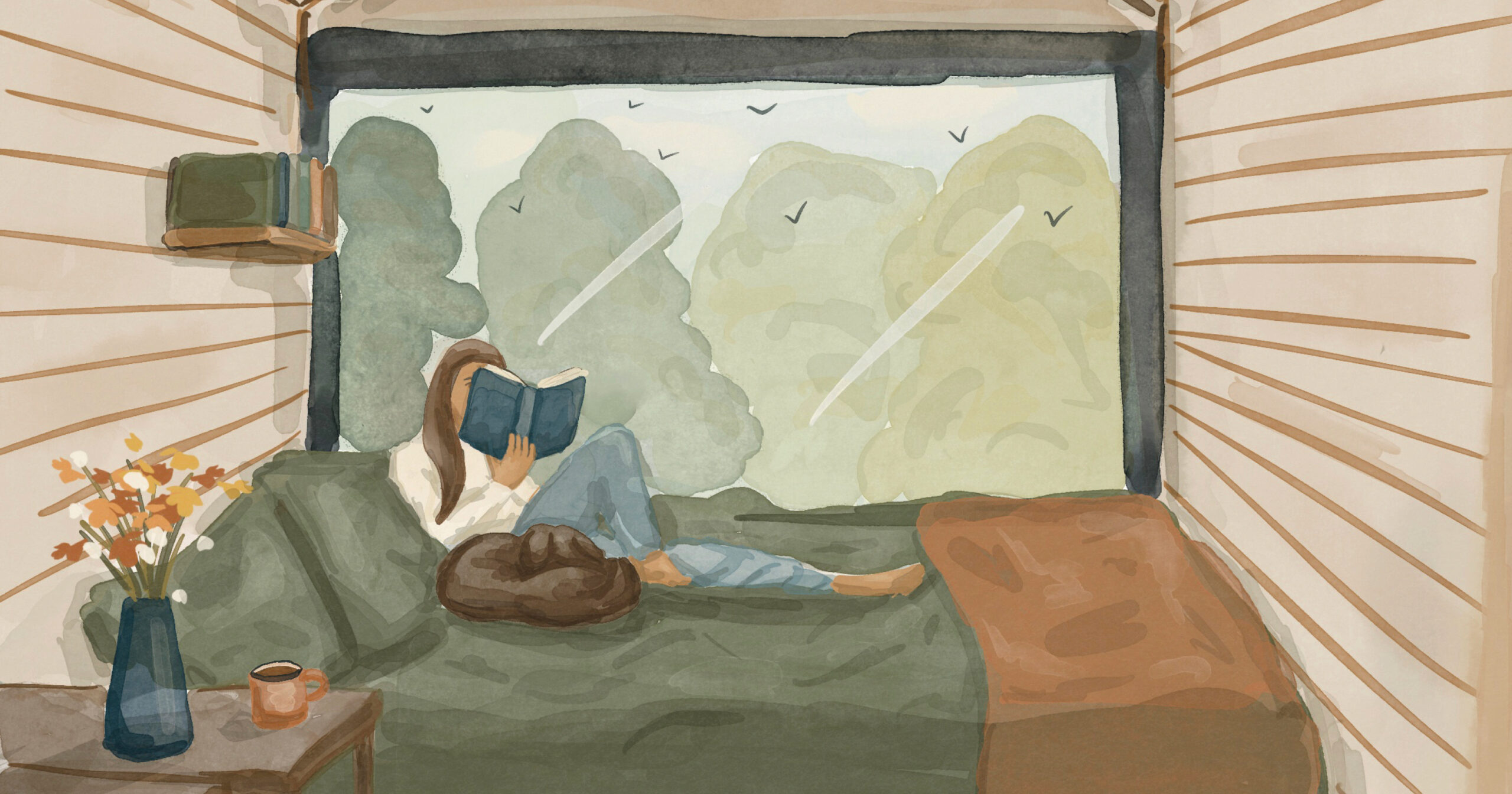
The cabin itself encourages this. Everything has been carefully thought through. The blonde timber panelling, soft linens, a reading nook set beneath a wall of glass looking out over the meadow…
At dusk, I attempt to light the firepit while an owl watches from the trees. It’s astonishing how quickly the senses wake up when there’s no background hum of technology. I notice the weight of a log in my hand, the strike of a match, the scent of pine and woodsmoke. After dinner, I curl up in bed, Miss Babs snoring gently beside me, and look up at the stars through the glass wall, grateful for the quiet the darkness brings.
By day three, something has shifted. I feel softer, slower and more aware of myself. After a deeply restful night, I wake naturally, hand-grind my coffee beans and savour the small ritual of starting the morning.
In the end, locking away my phone and logging off from life for a while feels less like deprivation and more like a return to stillness, to simplicity, but most importantly, to myself.
Getting the most from your digital-detox retreat
Tips for your time away, whether you’re disappearing on a whim or looking forward to a long-planned break.
Think ahead. Whether your cabin comes equipped with a mini-kitchen or just a hob, fridge and kettle, be sure to plan all meals ahead of arrival so you can bring everything you need. The last thing you want is to have to go back to civilisation because you forgot the butter. Some retreats will provide basics, such as coffee beans, loose leaf tea, oils and seasonings.
Do your research ahead of time and look for pubs or cafes within an hour’s walk, and a small shop in walking distance is useful. Just remember to take cash or a physical card.
Pick your season. A slow-fix retreat is a year-round option. Spring and summer breaks offer longer days and usually better weather, but winter retreats can mean crisp days, brisk walks and cosy hygge nights.
Pack for all weathers. Wellies, walking boots, windcheaters… when you’re staying in nature, you’re at one with the elements. Many cabins will have a log burner, but bring a cosy jumper for stargazing at night. I also took several books, my tarot cards and a notepad and pen. While screen-free days are a good time to try a new craft or start a project, equally there’s no pressure to create.
Be safe. When out walking in isolated areas, always be mindful of your route to and from the cabin. Check if your retreat provides maps of the local area and take a compass.
Prepare your mind. Start your slow down in the days before your retreat. Try to resist social media and news feeds, inform family and friends, put your out-of-office on and enjoy the rest.
Find Unplugged at unplugged.rest