
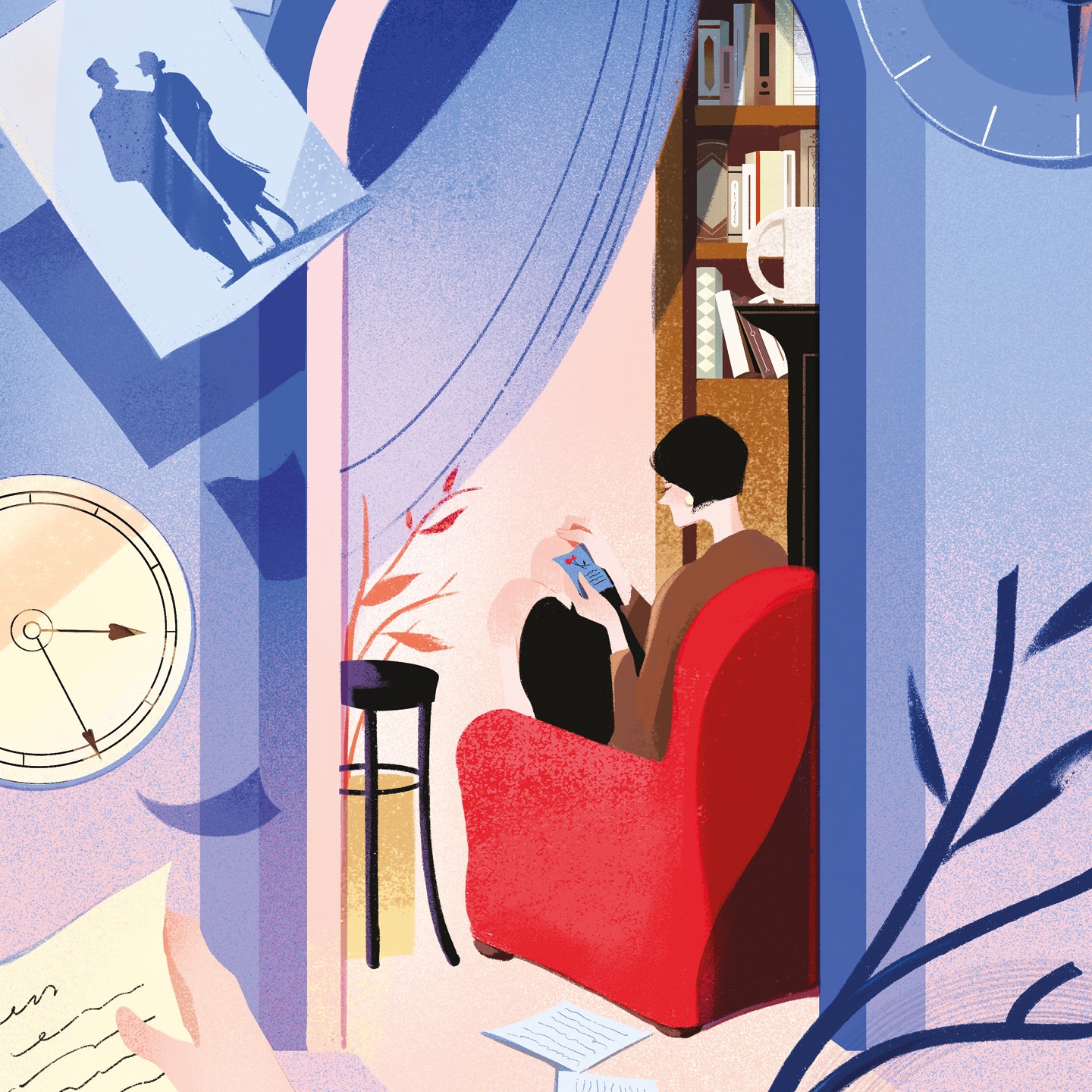

Some ghosts have nothing to do with the supernatural. Sometimes they’re the memories, regrets and old wounds that keep returning to haunt us long after the moment itself has passed: the criticism that still speaks in a parent’s voice, the relationship that ended but keeps being replayed, the embarrassing moment that still makes your stomach drop or the old version of yourself that you’re trying to outrun.
To feel haunted by the past is to live with time out of order. The memory may be old, but the feeling can seem current. It might return as a warning, a longing, a verdict or an old instruction. The mind may circle it in search of safety or meaning. The body may react as though something still needs protecting. Shame may turn one moment into a lifetime of judgment. Hindsight may ask your younger self to act with wisdom they hadn’t yet lived long enough to earn.
Unfinished business
According to mindset coach and clinical hypnotherapist Chantal Dempsey, past wounds often return because some part of you is trying to make sense of what happened.
‘A part of you is still looking for safety, validation, an apology, an explanation or to finally be heard,’ she says. ‘The mind keeps returning to it because the nervous system holds a charge around it. Their body hasn’t yet felt safe enough to file it as over.’
This helps to explain why some experiences linger for years. When the mind feels that something remains unfinished, it may return to the same scene again and again, searching for a missing piece: a reason, a warning, a lesson, a repair, a kinder verdict. This repetitive return is often referred to as rumination. It can feel like problem-solving, but it may also keep the old wound raw.
Ed Watkins, professor of experimental and applied clinical psychology at the University of Exeter, has described rumination as ‘repetitive thinking about the self, negative emotions, difficult events and problems’. In a Psychology Tools interview about rumination, he explains that it’s often an attempt to make sense of, understand or resolve a personally important difficulty.
That matters because it reframes the loop. If you keep returning to the past, you may be trying, again and again, to find a place where the experience can finally settle. The trouble is that the mind can mistake returning for resolving.
Familiar pain can become a place of return, not because it feels comfortable, but because it feels known. ‘There is a huge pull to the familiar,’ says Chantal. ‘Even when old patterns are painful, they are known. And to the nervous system, the known feels much safer than the uncertain.’
This is why you might reread old messages, replay an argument, check an ex-partner’s profile or rehearse the same story about being foolish, difficult, unwanted or not enough. From the outside, it can look like self-sabotage. From the inside, it may feel like preparation.
Ed has also noted that rumination can become ‘a mental habit that is triggered by stress, low mood, or anxiety’. This helps to explain why a past wound may become louder during difficult periods. The present places pressure on the system, and the mind reaches for a well-worn route.
Haunted heart
Past relationships are some of the most persuasive ghosts. They can return as longing, anger, comparison, curiosity, regret or the imagined conversation that never quite ends. But it may not only be the person you miss. Sometimes the ghost is the future that disappeared with them. The relationship may have carried a whole imagined life: a home, a family, a sense of being chosen, a more hopeful version of yourself. When it ends, the grief may also be for what didn’t happen.
‘The brain doesn’t like unfinished emotional loops,’ says Chantal. ‘So it keeps replaying, analysing, imagining different endings, trying to get certainty, closure or control.’ She continues, ‘The question isn’t necessarily about whether you want the person or the relationship back, but rather understanding what part of you is still attached to the story you thought this relationship gave you.’
A past relationship can become an internal room. You keep entering it not because it is good for you, but because it contains unanswered questions. Was I loved? Was I foolish? Did I matter? Was there something I could have done? Who was I becoming there, and where did that self go?
Shame sticks
Shame is one of the most persistent ghosts because it does something memory alone cannot. It turns an event into a verdict. It’s likely you can remember a throwaway comment, a mistake at work, a social misjudgment, a moment of exposure, a time you were laughed at, rejected or misunderstood. Years later, the same visceral reaction can return, as though the room has reassembled itself around you and you’re reliving it.
‘Shame keeps a memory alive because it turns what happened into something personal,’ says Chantal. ‘Especially when something is wrapped in secrecy, self-blame or embarrassment, your mind may replay the event again and again trying to understand it, fix it, hide it, undo it.’
Professor Paul Gilbert, founder of compassion-focused therapy, and psychotherapist Sue Procter have written that shame has ‘a certain stickiness about it’. In their paper on compassionate mind training for people with high shame and self-criticism, they also link internal shame with self-devaluation and self-criticism.
This is why a past humiliation can become more than a memory. It can become an inner voice. That voice may sound protective. Don’t do that again. Don’t be seen like that again. Don’t need too much. Don’t risk rejection. Don’t forget what happened. Yet protection can become punishment. The ghost says it is keeping you safe, while keeping you small.
Reflection vs rehearsal
Another ghost appears with time: the version of yourself you’re still trying to prove wrong. Hindsight can make the past look simpler than it was. You may have language, distance and experience now that you didn’t have then. But the perspective gained since can become a weapon when it’s used to condemn the you who was simply trying to survive, understand and choose with the knowledge they had at the time.
Why did I stay? Why did I say that? Why did I let them treat me that way? Why didn’t I leave sooner, speak sooner, choose differently, know better? These questions can sound like accountability, but they can also become a form of self-punishment. The self who knows better now may stand over the self who didn’t, asking why you stayed, froze, hoped, accepted too little or made the choice you made. There is a difference between understanding the past and rehearsing it as evidence.
Reflection tends to create space. It allows you to notice what happened, what it cost, what was learned, what still hurts and what might now be chosen differently. Rehearsal, on the other hand, tightens the loop. It repeats the same scene with the same verdict, gathering familiar evidence to confirm what was already decided.
Chantal says the difference lies partly in intention and agency. Reflecting through the lens of healing or learning can help you become more self-aware and choose differently. Rehearsing the past, by contrast, can leave an old pattern running in the background.
A useful question might be: is this memory teaching something new, or is it only repeating the old punishment? If the answer is punishment, the ghost may not need another hearing. It may need a different relationship.
Releasing the grip
Changing a relationship with the past rarely begins with forcing it away. More often, it begins with recognising what the ghost has been trying to do. Is it warning? Grieving? Protecting? Punishing? Asking to be heard?
Compassion can help here, although not by pretending everything is fine. Paul defines compassion as ‘a sensitivity to suffering in self and others, with a commitment to try to alleviate and prevent it’. It means turning towards suffering with steadiness, wisdom and care. In this context, compassion might sound like this: it hurt, it mattered, it shaped something, but it no longer gets to decide the whole of who you are. Letting go is often misunderstood. ‘There is a common misconception that you need closure from or with someone,’ says Chantal. But, she adds, letting go doesn’t mean the other person got away with it, or that forgiveness is required. It’s about taking back the space the old wound has occupied.
This is important because some ghosts never fully disappear. Some memories will still matter. Some losses will always be losses. Some versions of the self deserve grief, not erasure. Some old rooms may stay part of the house. But they don’t need to own it.
A healthier relationship with the past, says Chantal, means being able to remember it without being ruled by it. ‘The memory still exists but it no longer hijacks your nervous system and it no longer dictates your worth, your confidence, your relationships or what you believe is possible for you.’
That may be the difference between being haunted and being human. The past can visit without taking over. What happened may never disappear. What didn’t happen may still ache. Who you hoped to become may still need mourning. But slowly, carefully, the past can be given its proper place. It can become part of the story, rather than the force still writing it.
What to do when the past comes calling
Tips for changing your relationship with old ghosts
- Name the visitor. When an old feeling arrives, try to name it more precisely. Is this shame, grief, longing, fear, anger, envy, regret or the need to be understood? A named feeling can be easier to sit beside.
- Ask what it is trying to do. Is the memory warning, protecting, punishing, grieving, explaining or asking for repair? Understanding its function can create a little space between the feeling and the response.
- Notice whether anything new is being learned. If the same scene keeps returning with the same verdict, it may be rumination rather than reflection.
- Offer context to the past self. You did not have everything you know now. Growth does not have to become a weapon.
- Choose one kinder next step. Not a grand exorcism. Just one action that belongs to the present rather than the old story.
If memories feel overwhelming, intrusive or difficult to manage alone, support from a qualified therapist, counsellor or GP can be an important first step.
Find Chantal Dempsey at chantaldempsey.com