
There’s a reason Brittany is arguably France’s greatest coastal crowd-pleaser; no other region’s sensory superpowers are quite as finely tuned as when the Atlantic assails lighthouses, gulls eyeball the catch du jour atop blue-shuttered cottages and a warm waft of crêpe competes with the fresh sea air.
But it’s not just for quintessential boat-bobbing scenes that people come to the outstretched arm of the country’s north-west. They’re drawn to another dimension that’s every inch a match for the sea’s drama, yet is far stiller than waves. They come to experience the mysterious standing stones – or menhirs – located in the town of Carnac on Quiberon Bay.
Stone sentinels
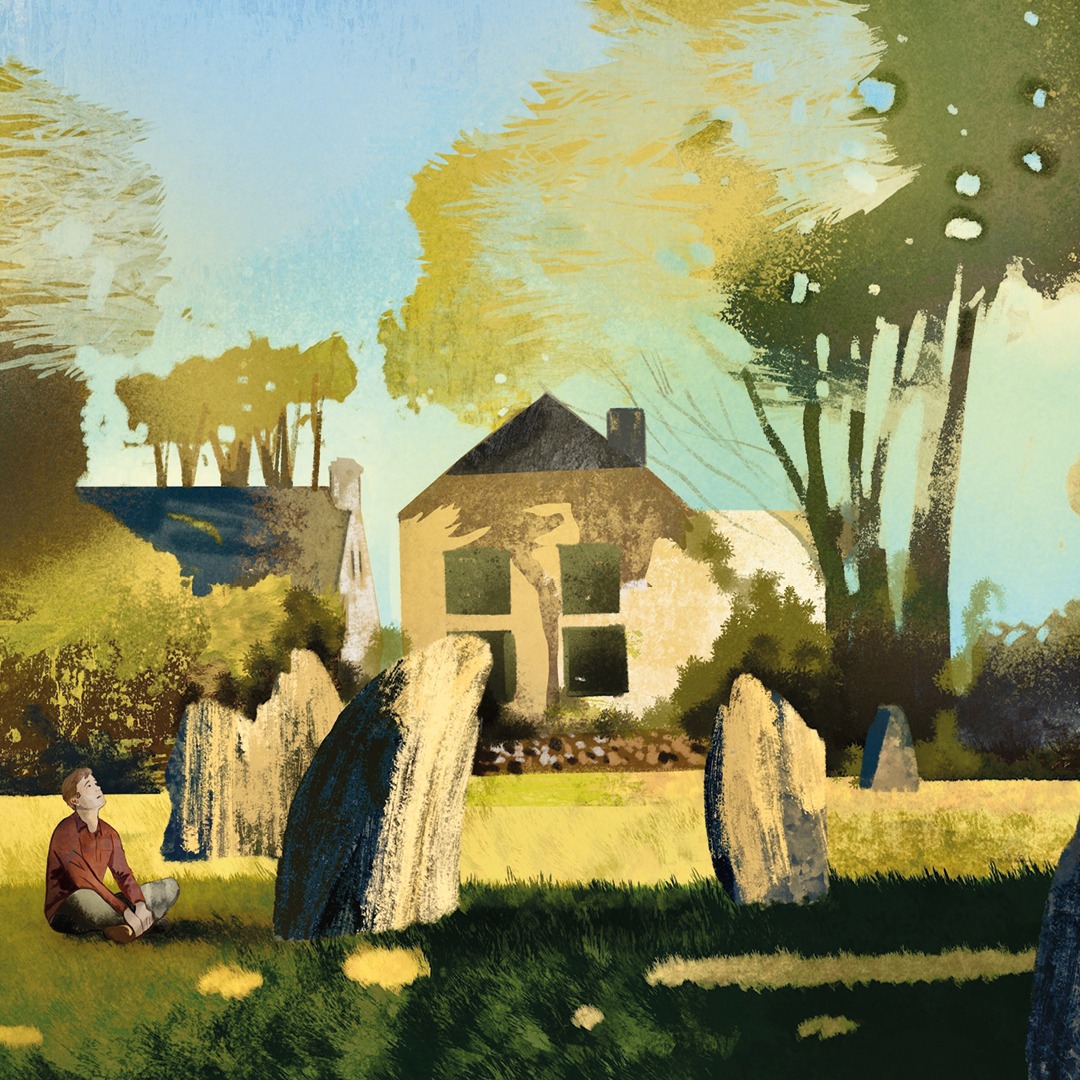
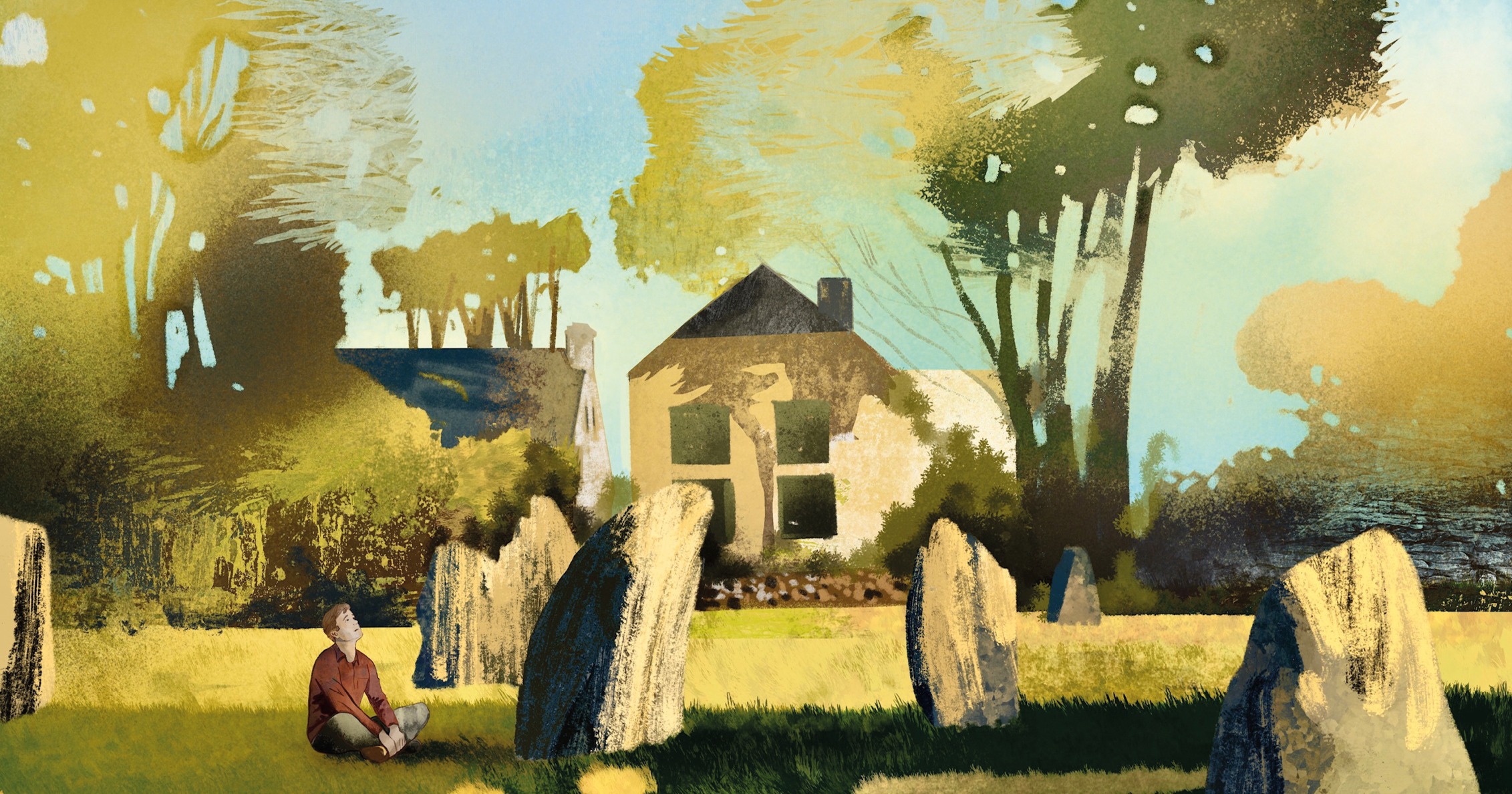
At first glance the untrained eye may be unstirred by what simply looks like natural rock formations on an undulating plain. At second, your curiosity might be piqued when you observe that there are too many stones to count, their end too far to see. Finally, you spot the most arresting thing of all: that the granite boulders are in near perfect alignment, as if the gods of dominoes placed them there themselves This is not the hand of Mother Nature, but of humanity.
Now spare a thought for the tour guides who have to perform some kind of miracle, the challenge to actively engage visitors when they are all here for different reasons. There’s the geologist, for example, probing for hard facts about granite’s powers of endurance. Or the children who, on hearing the local legend of Saint Cornély (lore has it that the menhirs were Roman soldiers turned to stone by the saint), are hell-bent on inventing their own. Many people are keen to glean greater archaeological knowledge, along for the thrill of who was here before us and how they lived. People, that is, such as amateur excavators James Miln and Zacharie Le Rouzic, who worked tirelessly here in the 19th century; it’s thanks to the combined efforts of this detectorist duo that Carnac’s stones were judiciously researched, restored and ultimately protected by classification. Miln is said to have laid out all his findings on his hotel bed like a cabinet de curiosités.
Still connection
So, here’s what is known about the site referred to as the Alignements de Carnac. It’s known that there are a staggering 3,000 menhirs here, stretching over 4km. It’s known that they’ve been here for around 6,000 years. And it’s known that the stones were made from granite locally extracted by clever, strong and resourceful people displaying a level of toil we’d find intolerable today. Experts believe that this was not a burial place (no funereal artefacts were ever found), but more likely a feat of monumental architecture designed to carry a message. But what was it?
Hypotheses abound. Perhaps these formerly nomadic people were erecting stones to lay down roots and mark home. Perhaps it was designed to send a clear message to strangers approaching from the sea – a wall, of sorts, to say, ‘Come no further. This is sacred ground.’
We may never know the truth. And herein lies the sweet spot for Monsieur Le Tour Guide. The visitors might all be here for different reasons, but regardless of what that passion is, they’re united in a common sensory experience. In quietly pausing to contemplate the puzzlement, there’s a sense of connection with the rare thing that is stillness. Connection with people who, despite being alive millennia before us, were essentially the same as us: loving, living, dancing, crying, building. As if standing stones have the power to connect things that can’t normally be connected, like a hand on the back from a sage elder affirming that we’re all part of something continuous.
The big reveal is, incredibly, that Carnac’s treasures only scratch the surface. In fact, you could say that in this part of Brittany, Carnac is just one painting in a rich and sprawling art gallery. Within 1,000 square kilometres, the menhirs are part of a far bigger family of megaliths (the group name for ancient stones built during the Neolithic period) including cairns, tumuli and dolmen – each a different type of prehistoric burial site. They’re literally everywhere you look: in people’s gardens, on the high street, in woodland, on the roadside.
Magical trail
Just as everything from rare animals to endangered languages needs safeguarding for the future, so too do megaliths. And that’s where the protective arm of Unesco came in, collectively classifying Les Mégalithes de Carnac et des Rives du Morbihan as a world heritage site in 2025.
Yet with such a great number of megalithic sites here (550, of which the Carnac-3000 constitutes just one) how do you care for them all? You can’t exactly throw a rope around the lot, can you? No, but you can work hard in the community to ensure local people love and respect their neolithic neighbours. Much work is done with local schools for example, since ideas, values and passions are all developed in the formative years.
Unless you’re a bird, it’s unlikely you’ll be able to see the lot, though you can create your own trail to get a sense of different members of the megalithic family. You could stand atop the Tumulus St Michel; it might look to the naked eye like a regular hill, yet beneath your feet is Brittany’s answer to the Egyptian pyramids – a place of burial where kingly axes evidenced the rank of the deceased. You could move on to the Carnac Prehistory Museum where there’s a curious anomaly; though this landscape’s acidic soils destroyed human bones, on the nearby island of Téviec a prehistoric female skeleton was discovered perfectly preserved by her bed of shells. Drop a pin at Locmariaquer to see the famous Broken Menhir (if standing stones are like people, this 20-metre one’s just sleeping), before cycling around Kerpenhir Point – eyes peeled for Stonehenges sur Mer. And if your trail isn’t complete without a dip, head to the Kerbourgnec stones at St Pierre de Quiberon, where menhirs are submerged in the sea.
For perhaps the most evocative megalithic moment of all, you could take the boat destined for Cairn de Gavrinis from the little port of Larmor-Baden on the Gulf of Morbihan. On this tiny island is a mausoleum magnifique where you stoop to enter a prehistoric corridor and shine torchlight on symmetrical patterned prehistoric wall art. Could it be that the symbols you’re illuminating represent waves? Wheat on the wind? Boomerangs? Nobody can be quite sure. But that doesn’t seem to matter. Because who doesn’t love a history mystery?
For more information visit baiedequiberon.co.uk, carnactourism.co.uk, golfedumorbihan.co.uk