

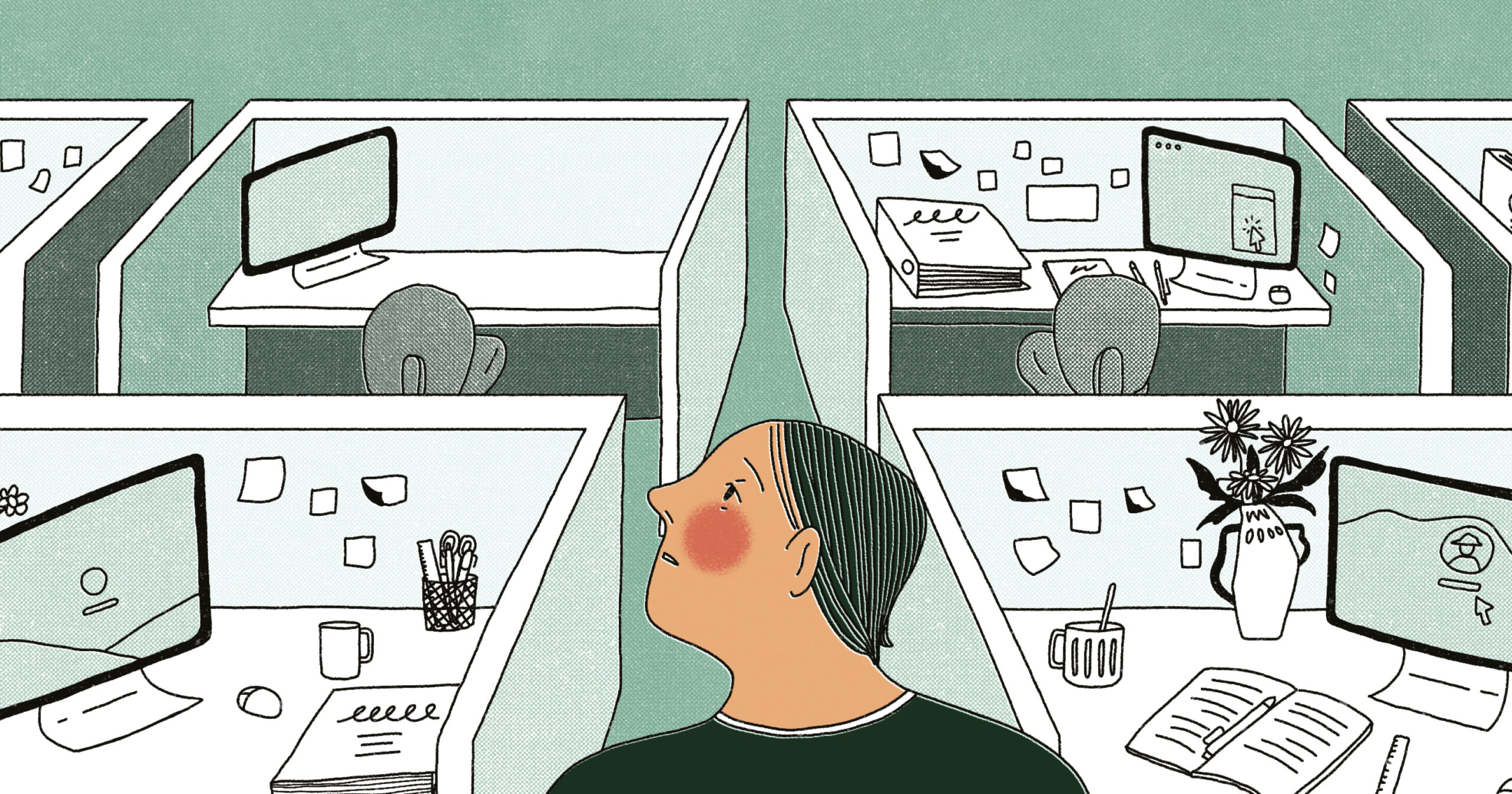
Maybe you’re familiar with that sinking feeling in the pit of your stomach when a work friend tells you they’ll no longer be working with you. Perhaps you’ve experienced the struggle of having to act excited when they share they’ve got a new role, while pushing down feelings of sadness as you digest the news. Often, you don’t realise the impact someone has had until you discover they’re leaving.
As psychotherapist and relationship expert Esther Perel says in her article, ‘Work Friendships Matter More Than You Think’, ‘These friendships are… essential. They are the quiet scaffolding that holds us up in our work and, sometimes, in our lives. Many of us spend more of our waking hours with our colleagues than we do with our own families.’ So regardless of whether your colleague has resigned, been made redundant or their contract is ending, it’s understandable to feel a mix of emotions about their looming (or perhaps recent) departure.
Why it has an impact
Esther reflects that work friendships are a ‘unique kind of companionship… forged inside the structures and pressures of labour and performance. What makes them profound is not necessarily how much colleagues “know” us, but how we show up for each other’. She gives examples of this, such as ‘loyalty in strained moments, recognition when the labour is unseen, honesty when the stakes are high, relief when the load is heavy, perspective when we lose our way, protection when we need a witness, support when things are tough at home, collaboration, because we know it makes the work better, and comedic relief, as much as possible’. So, regardless of whether the person leaving is considered ‘just a colleague’ or an actual friend, they can be cherished and their departure can be impactful.
Colleagues and work friends can be an important form of social connection – think weekend debriefs on a Monday morning over coffee, lunch-break chats or after-work drinks on a Friday night. And they can be a source of support when things feel challenging – such as in the midst of workplace tension or working in an under-resourced organisation. Work friends may also show up when things feel tough personally – by helping you to complete a project, for instance, covering part of your work role or performing a kind gesture like leaving a cup of tea on your desk.
Working in close-knit teams can also be meaningful – you might feel part of something bigger than yourself. Colleagues often have unique bonds and develop insights and understandings about how each other works and thinks, making time at work feel more enjoyable and less isolating. The impact can sometimes be subtle: an exchange of glances during a team meeting that says ‘I noticed that too’, or a shared joke to lighten the mood when things feel awkward or tough – small moments that make you feel seen. Sometimes the loss of a team member can mean fewer opportunities for team work and collaboration, too.
Work colleagues or friends may also help to build confidence and self-identity. They can encourage or inspire you to step up in ways you might not otherwise have felt comfortable doing. This could look like speaking up in a meeting or voicing concerns about workload to management despite experiencing self-doubt. When team members model a certain behaviour, others are more likely to follow suit. Consequently, when a colleague leaves, you may lose motivation to work on areas you would otherwise have developed in. Team culture, staff morale and the workloads of remaining staff can also be affected.
Conflicting emotions
Emotions give insights about your needs and they can motivate action, so it can be helpful to be curious about them. When an interpersonal loss of any sort occurs, it makes sense for grief and sadness to surface, even if they aren’t always expected or their intensity is greater than anticipated. These feelings can signify that the relationship has meant something, and may prompt you to express gratitude for the person leaving.
Sometimes the emotional experience can feel more complex, particularly when unexpected emotions arise. If it’s a work bestie who’s moving on, you might expect to feel a sense of grief. But if it’s someone you consider as ‘just a colleague’, it can come as a surprise when the same sort of feelings are triggered.
Conflicting feelings are natural. You might feel happiness for the work friend who has a new job, alongside sadness and even envy – if, for example, it’s a challenging work environment and you wish you were moving on too. Being caught off-guard by emotions or experiencing conflicting ones can lead to self-judgment (‘Why am I feeling like this?’ or ‘I shouldn’t be feeling like this!’), resulting in confusion, shame or guilt, which leads to increased suffering.
And different feelings might show up at different times. You might feel disappointed when your colleague tells you they’ve decided to quit, and then lonely once they’ve left. Loneliness may highlight a need within you for social connection at work. Anticipatory grief can be triggered by the thought of a work friend leaving, and in the lead up to their final days of work. If it’s a close work friend who’s moving on, or you feel left behind after a mass exodus of co-workers, you might feel a sense of abandonment.
In the time leading up to a colleague going, anticipatory anxiety and dread can creep in, as well as a spike in anxiety once they’ve left. Anxiety often leads to catastrophising and overestimating a potential threat – maybe you assume things will go terribly once they’ve gone, while also underestimating your ability to cope with an increased workload or feelings of isolation. Sometimes these worries will eventuate, and sometimes they won’t. Either way, try to remember that anxiety can be a way of problem-solving, helping you to cope ahead with any fears.
Mark the moment
At workplaces and across management, the focus is often on hiring staff and less so on staff departures – which means a hole is invariably left when someone moves on. Whether or not management is aware of the impact, there may be a lack of acknowledgement of such losses and their impacts on those continuing in the workplace, which can trigger frustration and other emotions.
In an interview exploring unprocessed organisational grief with Culture Amp CEO Didier Elzinga, Esther says it’s important for organisations to create structures and space for feelings of grief to be expressed. She suggests a framework for processing such feelings in the workplace: ‘Name it… frame it… contain it… normalise it.’
The relationships you form in the workplace may matter more than you realise. In her article, titled ‘Letters from Esther: The Work Between Us’, Esther reflects: ‘I’ve always said that the quality of our relationships determines the quality of our lives. But I also believe the quality of our relationships at work determines the quality of our work – and our capacity to stay, to care, to thrive.’
She acknowledges that it’s the moments of connection, authenticity, feeling seen and supported that are meaningful. So it’s no wonder that when a valued colleague leaves a mixture of feelings will surface, often signifying the impact they’ve had on you and anyone else left behind. But knowing it’s natural to feel a myriad of emotions, and understanding how to process them, may help you to work through these kinds of losses with more clarity, confidence and less suffering.
Working through the loss
Practical ways to cope when your work friend leaves:
Be mindful
Be curious about what you’re feeling. Try to identify your emotions and acknowledge them (for example, ‘This is sadness’), without judgment. Remember conflicting emotions can co-exist.
Practise self-compassion
Validate your feelings by saying, ‘It’s understandable I’m feeling this way’ or ‘It’s okay to be feeling this way, even if it’s uncomfortable.’ Acknowledge your human-ness and remember that other colleagues may be able to relate to your feelings.
Honour the loss
Share your gratitude for the person and celebrate their contribution to the workplace. Organise a farewell morning tea and/or write them a goodbye and thank you card. See if other colleagues would like to participate.
Seek connection and understanding
Share your feelings with the person leaving, to your colleagues or to someone else that you trust and feel safe with.
Give yourself permission to feel and heal
Shed a tear if you need to. Do something comforting or soothing if that feels helpful. Perhaps even a temporary distraction from your emotions is what is required. Or maybe moving your body in some form could be grounding or help to provide a physical release from emotions such as anxiety.
Tend to your needs
When emotions arise, ask yourself, ‘What do I need?’ (in the moment and longer term). Maybe there is a need to be assertive to management about your workload when your colleague leaves, or a desire for social connection that could be explored with other colleagues? Or perhaps your emotions suggest it’s time for you to explore other job opportunities too.
Maintain connection
Just because your colleague is no longer working with you, doesn’t mean the relationship has to end. If appropriate, and if a shared desire exists, try to maintain the relationship moving forwards.
Kaitlin is a clinical psychologist from Melbourne, Australia, who enjoys supporting people on their paths to healing by helping them to develop a more understanding and compassionate relationship with themselves and their struggles. Visit spacetobloom.com.au or follow her on Instagram @spacetobloomaus