

Deadline = a narrow field of time by which an objective must be accomplished.
Deadlines. The very definition of the word is enough to bring you out in a sweat, with its ‘musts’ and ‘objectives’ and stifling constrictions. Yet the modern world is rife with them. At work and at home, the pressure is on to achieve and respond, if not instantly, then within a very short timeframe. Emails invade your screen, red flags urge action. Reports must meet publication dates. Quotas demand fulfilment. Negotiated offers threaten to expire.
Even leisure time is pressured: sign up for pre-release tickets… these seats will be held for five minutes… book now, limited availability.
Managed correctly, deadlines can help give your life structure. They enable you to prioritise tasks more effectively, tackle challenges and make rapid decisions. So why do they so often have the opposite effect – bearing down like storm clouds, impairing your vision and judgment and at worst bringing you to a standstill? Just what makes deadlines so stressful, and is there a way you can learn to love them – or at least make them work for you?
Diagnosing the problem
The evolutionary causes and physiological effects of stress are largely the same for everyone. When a situation is perceived as carrying risk, it triggers a cascade of physical and chemical changes in the body, notably an increased heart rate, rapid breathing, muscle tension and release of stress hormones. Collectively known as the fight-or-flight response, it prepares the body to either escape danger or manage it.
When the danger is genuine, this behaviour is beneficial; when it is merely perceived, or is maintained over a long time, there can be negative impacts on mental and physical wellbeing.
In early human history, stress was attributed to matters of survival: finding food, protecting property from invaders, disease and predation. Today, it is survival of a different type that often causes the adrenaline to start pumping.
Fear of professional failure or embarrassment caused by missing a deadline set by someone in authority can lead you to overthink its importance. Hard deadlines – the fixed, non-negotiable sort with financial or legal repercussions – can paint a picture in which overrunning will result in the loss of respect of your colleagues, or perhaps even the loss of your job. As multiple deadlines appear on your calendar, you may start to view them as your ancestors might a pack of wolves: as multiple deadly threats encircling you. Far from being motivational, this can lead to putting off essential tasks as a way to avoid confrontation.
Dr Paul Vincent, a general practitioner and mental health management expert from the north-east of England, explains this can become a vicious cycle. ‘Jokes such as “I’ll procrastinate tomorrow” suggest a common problem for many people faced with a deadline. You might put things off to avoid stress; however, this in turn can lead to rumination – dwelling on the challenge until it results in poor sleep, disturbed relationships and mounting dread of the task.’
Putting things off
Paul, who provides counselling services covering areas from anxiety to bereavement, has decades of experience observing trends in how people react to stressful situations, including those perceived as hard deadlines.
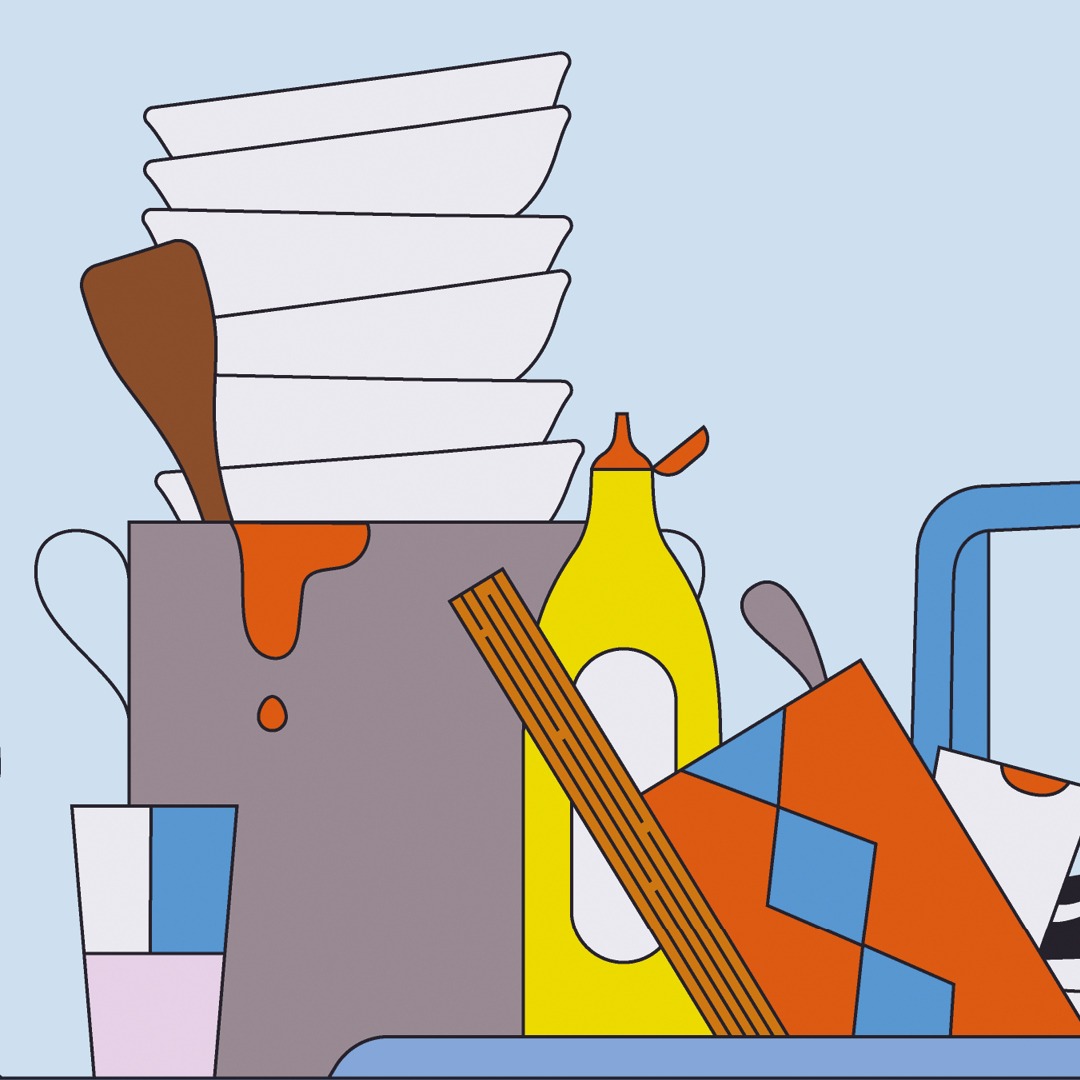
‘Humans are endlessly creative in finding ways to circumvent deadlines,’ he says. ‘It’s like washing up the dishes: you don’t want to do it, so you allow the pile to get bigger, meaning you want to do it even less. Similarly, not replying to an email because it’s not an ideal moment is common – but the timing never is ideal, so the email remains unanswered. ‘As a coping mechanism to reduce the stress of a looming deadline, you might do something else moderately important to feel as if you have achieved something, but this doesn’t get the critical job done.’
Without careful planning, unrelated tasks become a distraction, and the problem causing your mounting anxiety is not addressed. Alternatively, some people react entirely differently and experience a kind of tunnel vision, where they’re unable to focus on anything beside the immediate problem. When stress affects your capacity to see the wider context like this, you’re more likely to leap to conclusions and display knee-jerk reactions. The problem is kicked up the field, but not necessarily towards the goal.
Start at the beginning
How you approach the issue of deadlines will differ, depending on whether it is the amount of work that is causing you stress or the difficulty of a specific task. If there’s one large assignment on the horizon, for example, getting going is your first challenge. ‘Starting a large task is often one of the biggest difficulties,’ says Paul. ‘An effective solution is to use a self-reward system and bribe yourself with something.’
Create a series of measured targets, and once you have completed a set amount of the task, give yourself a reward to recognise the significance of your achievement. Paul highlights the importance of sticking to a structured regime: ‘This only works if you reward yourself once you have done a set amount of work, or when you have hit your target,’ he says.
Once you have begun working towards your deadline, prevent yourself from becoming overwhelmed by breaking down a large job into smaller, manageable chunks. Inspiration for this approach comes from a surprising source: sports science.
Dr Tracy Donachie is an HCPC registered sport and exercise psychologist and a lecturer in this subject at Newcastle University. Her research focuses on perfectionism and its effects on performance and mental health, and she first clarifies how this relates to deadline stress.
‘Goals can be stressful because they often become tied to your sense of self-worth. When people, especially those scoring higher in perfectionism, set goals, they don’t just want to meet them, but they feel that they must meet them to feel competent or valued. This pressure can lead to overthinking, anxiety, frustration and dejection,’ she says. ‘From a sport psychology perspective, pre-competition emotions such as anxiety or frustration often arise when there’s a perceived gap between your current state and your ideal performance. You start focusing on “what if I don’t achieve it?” rather than “what can I do right now to move towards it?” and that shift in attention can narrow your focus. Understanding that discomfort is a normal part of striving and learning to manage the process rather than the outcome helps reduce that stress’.
You might have used the laddering technique when attempting to hit a personal best in the gym. It involves alternating between long and short spurts of exercise – a period of intense work followed by a break, then a series of shorter sessions interspersed with shorter rest periods – and is scientifically proven to achieve results.
Based on a 2024 study, researchers Pramod and Kalimuthu confirmed: ‘Ladder drills… are beneficial for improving neuromuscular efficiency. These workouts aim to increase an athlete’s power, speed, agility and coordination.’ As with physical exercise, the same approach can be used to aid task progression while avoiding burnout.
‘[Deadlines] can be especially overwhelming for people prone to perfectionism,’ Tracy explains. ‘As you divide work into chunks, ask yourself which of your values it reflects most. Maybe it’s about growth, persistence or teamwork. When your smaller goals connect to your values, they feel more rewarding in themselves, not just because of the end result.’
‘Think in terms of process goals (things you do) rather than outcome goals (things you achieve). For example, in a writing project, rather than “finish the chapter by Friday”, use micro-goals like “draft 300 words before lunch” or “revise two subsections after reading feedback”.
‘Our brains are wired to respond positively to progress, so celebrating small steps can keep you motivated over time. Focus on “do your best” goals rather than perfect outcomes.’
Taking stock
Where the number of deadlines is the source of stress, it’s vital to prioritise and manage your time. Careful sequencing of tasks can provide comfortable structure in a busy work environment.
Tim, a Boeing 787 senior first officer for a long-haul airline shares this advice: ‘As flight crew, we are trained to manage high-pressure situations by taking a couple of seconds to think before acting. This avoids being impulsive, allowing improved performance. All operations are standardised, with checklists to help prioritise tasks in order of importance. During the cruise, when workload is low, we use the time to prepare for moments of higher workload. This means that when a workload spike is encountered, we can just put our plan into action as we have already anticipated it.’
This strategy helps resist the fight-or-flight response and cuts through the ‘brain fog’ caused by feeling overwhelmed. Try working on harder tasks earlier, dipping into easier work when you start to tire. Create a deadline checklist in order of urgency to allow yourself adequate time to work at a comfortable pace.
‘No matter how high pressure the situation is, there is usually time to take a couple of seconds to just do nothing. It is normally better to take this time and react appropriately, rather than rushing into something that may not be the best course of action,’ says Tim.
Reframe and relax
While deadlines aren’t going to disappear, have you ever considered that some are not as important as you first thought? Paul calls it ‘the tyranny of urgent’, and says: ‘Deadlines may have been set by yourself or others, but their immediacy is overstated. Don’t be afraid to say no to additional work just to make you seem helpful, if it will compromise other critical deadlines or your mental health.’
It’s also healthy to consider alternative solutions to approaching deadlines. ‘Using the washing-up analogy, is running out of crockery really a hard deadline?’ he says. ‘Reframe the problem. You can always eat out in the short term or, as a longer-term solution, get a dishwasher.’
Seek help from a colleague to share the workload, or offer to pull another deadline forward in exchange for pushing a harder one back. Remember, knowing your limitations and strengths is a sign of professionalism, and will earn you more respect than underperforming for an unreasonable deadline.